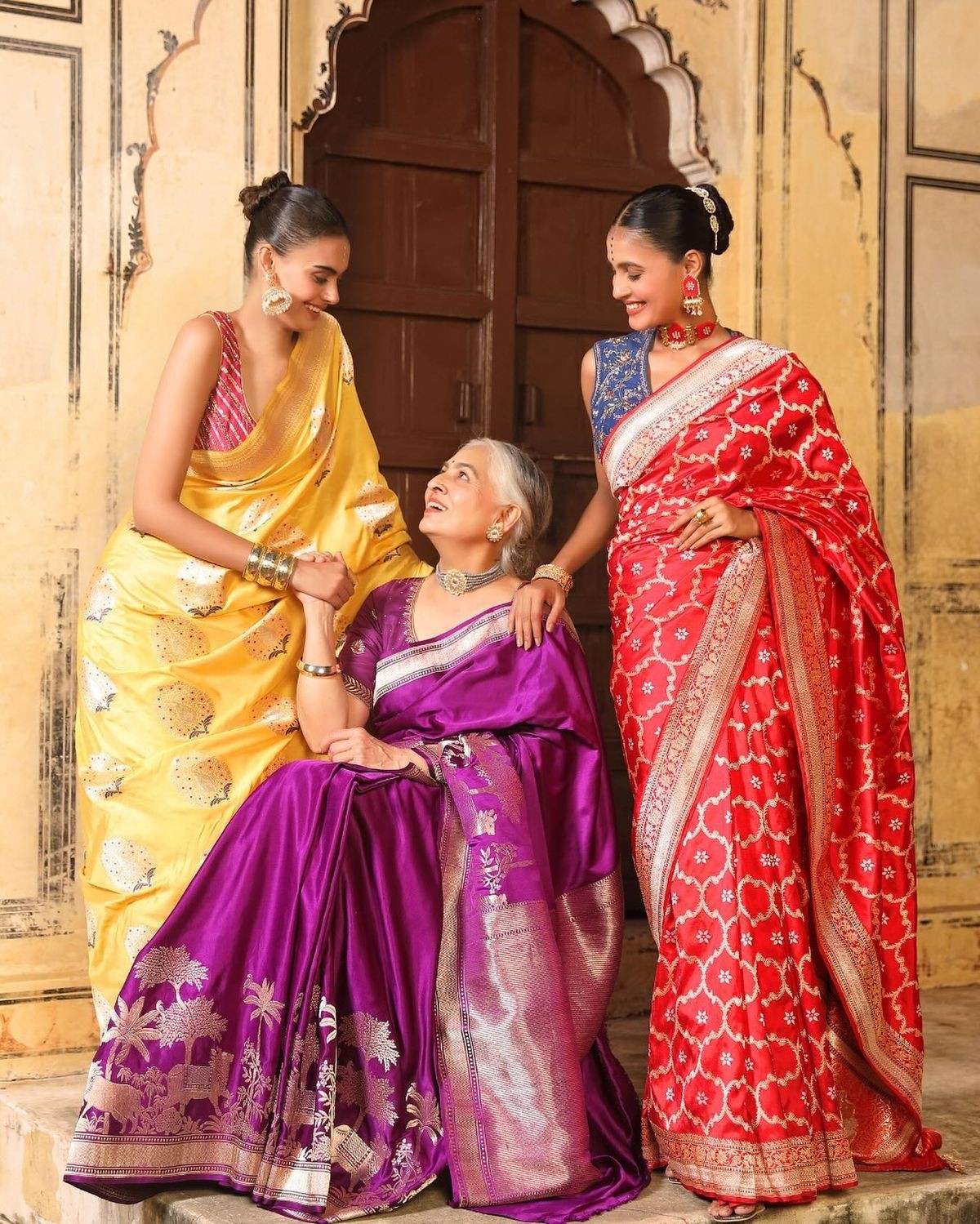
Walk through the narrow lanes of Kanchipuram, a temple town about 75 kilometres from Chennai, and you'll hear it before you see it — the steady clack-clack of pit looms coming from almost every second house. This is where Kanchipuram silk sarees, arguably India's most recognised bridal textile, have been woven for over four centuries.
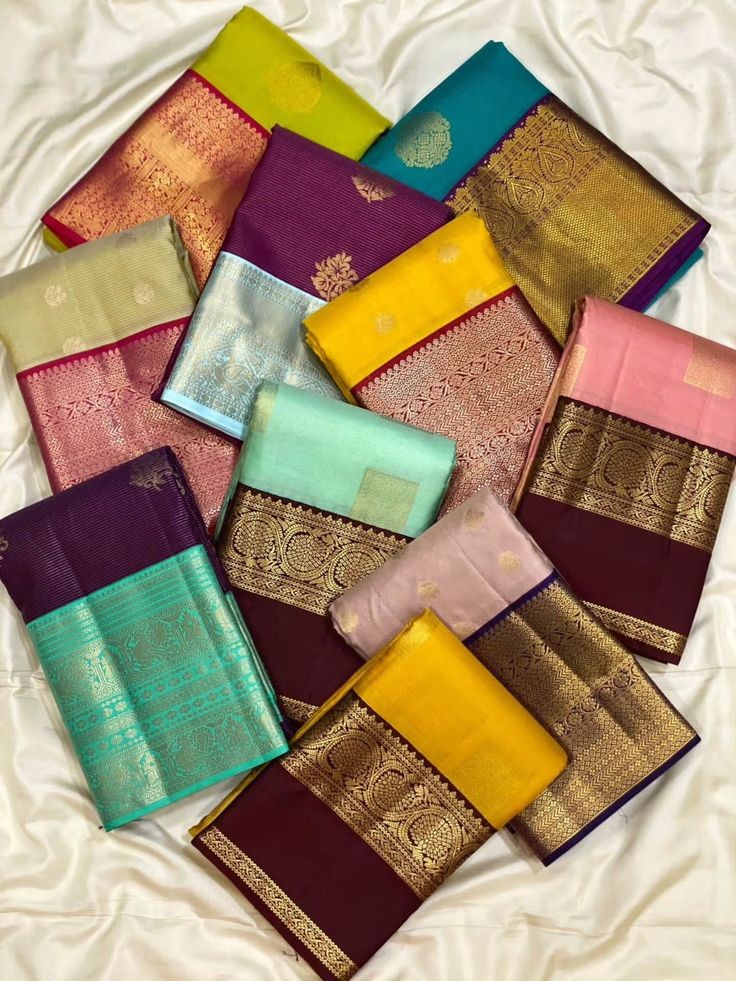
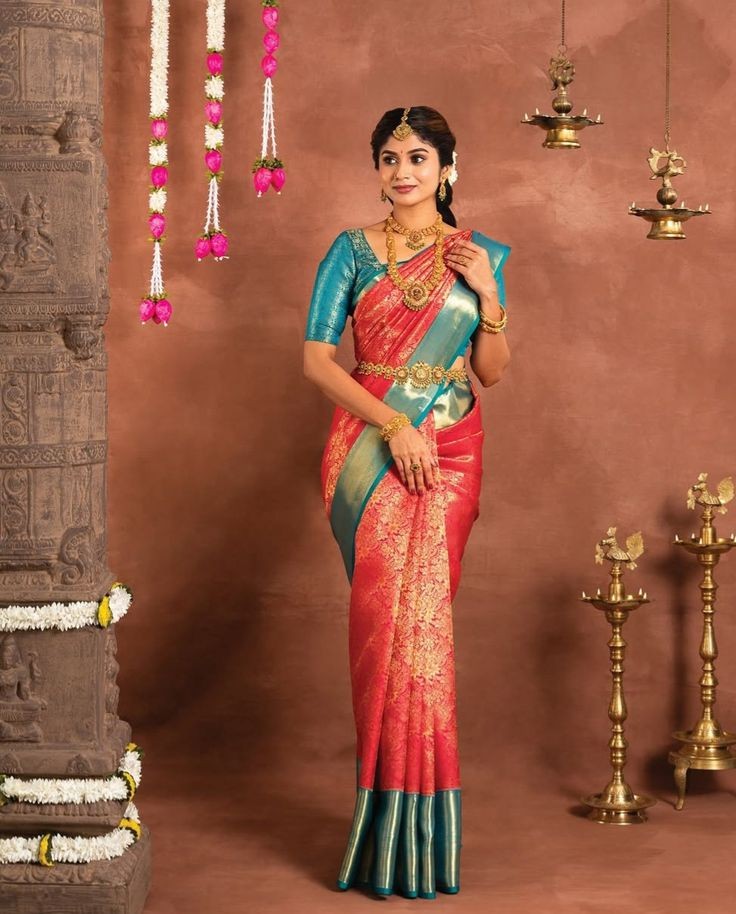
Weaving communities in Kanchipuram trace their craft back to the Chola dynasty, when weavers were invited to settle near the temple town to create silks for temple deities and royalty. Over generations, the craft evolved a distinct visual language — rich, saturated body colours paired with a contrasting zari border and pallu — that's still the hallmark of a Kanchipuram saree today.
Three things set a genuine Kanchipuram silk saree apart from other silk weaves. First, the mulberry silk used is heavier and more lustrous than most other regional silks. Second, the zari — the metallic thread used in the border and motifs — was traditionally pure silver wire electroplated with gold, though most contemporary pieces use a silver-and-gold alloy zari that keeps the shine without the historical price tag. Third, and most distinctive, is the interlocking weave technique called korvai, where the body and border are often woven separately and then joined together on the loom with an interlocking pattern strong enough that the border won't fray away from the body even after years of wear.
This is also why a genuine Kanchipuram saree has a visible woven line, not a printed or embroidered one, at the join between the body and border colours — a good way to tell an authentic piece from an imitation.
Kanchipuram sarees are woven with motifs drawn from temple architecture and nature — check the pallu and border of a piece closely and you'll often find rudraksham (prayer bead) patterns, temple gopuram outlines, peacocks, mangoes, and checks known as gandaberunda after the mythical two-headed bird. These aren't decorative afterthoughts; each motif has been passed down through specific weaving families for generations, and identifying them is part of how connoisseurs judge a piece's origin and craftsmanship.
At Namma Udupu, every Kanchipuram piece in our collection is sourced directly from weaving families continuing this tradition — woven on the same korvai technique, in the same temple town, the same way it's been done for generations.